Software Composition Analysis (SCA): Definition, Function, and Tips



Software supply chain risk now affects almost every connected product you build or manage. Many devices rely on open-source libraries, third-party packages, and reused code that may contain hidden weaknesses. Software composition analysis helps you identify these risks early and control them across the product lifecycle.
Key Takeaways
- Software composition analysis identifies third-party and open-source components inside software and firmware.
- It helps you detect known vulnerabilities, licence issues, and outdated dependencies.
- Strong SCA security supports safer releases, faster remediation, and clearer ownership.
- SBOM generation is now a key output of modern SCA programmes.
- Hardware manufacturers need tools that analyse binaries, not only source code.
- Compliance frameworks such as the CRA increase the value of continuous component visibility.
- Good software composition analysis tools should integrate with CI/CD and ticketing workflows.
- ONEKEY helps manufacturers automate analysis, remediation, and compliance tasks.
What is Software Composition Analysis (SCA)?
Software composition analysis is the process of identifying software components used inside an application, firmware image, or product build. It maps dependencies, checks versions, and compares components against known vulnerability and licence databases. This gives you visibility into code you may not have written yourself.
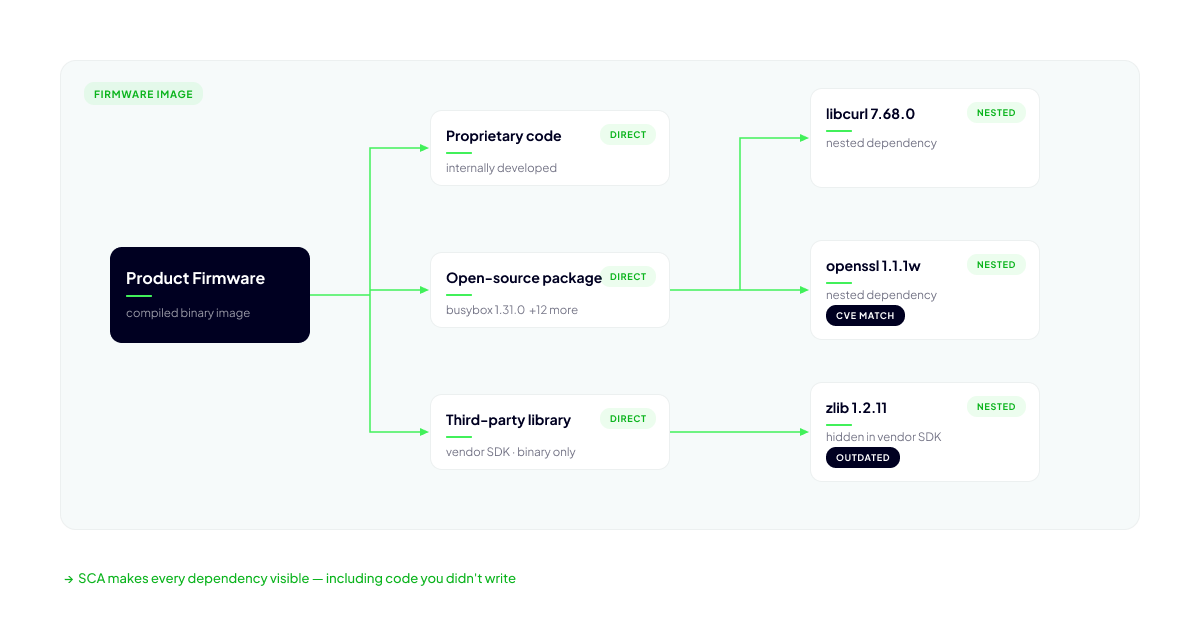
Many teams focus only on internally developed code. That misses a major source of exposure because modern products often depend on external packages. A single vulnerable library can affect many products and versions at once.
This is why software composition analysis has become a core part of product cybersecurity. It helps you understand what is inside your software before attackers do. It also supports safer updates and stronger governance.
How Does SCA Work? The 4 Core Functions
Most software composition analysis tools follow the same practical workflow. They discover components, assess risk, review licences, and feed actions into delivery processes. The depth of analysis often separates basic scanners from mature platforms.
Dependency Discovery and SBOM Generation
The first step is to identify all components inside your product. This includes direct packages, nested dependencies, and reused libraries that teams may overlook. Accurate discovery creates the foundation for every later decision.
Modern platforms also generate a software bill of materials. If you are unsure what an SBOM is, it is a structured inventory of the software components inside a product that helps you trace affected parts when new vulnerabilities appear. For embedded products, discovery may require binary analysis rather than source inspection because supplier code or legacy firmware often lacks clean build records.
CVE Matching and Vulnerability Scanning
Once components are known, tools compare them against public vulnerability databases such as CVEs. This process highlights components linked to published security flaws. It is one of the most recognised uses of software composition analysis.
Not every match creates real risk. Version context, exploitability, product exposure, and mitigation controls still matter. Good platforms make open source vulnerability scanning more effective by reducing noise, prioritizing action, and saving engineering time.
License Compliance
Open-source software can create legal obligations as well as security risk. Different licences may require attribution, source disclosure, or usage restrictions. Ignoring these terms can create commercial and compliance issues.
SCA tools help you detect licence types across all discovered components and flag conflicts between packages used in the same product. Licence visibility is especially valuable when multiple suppliers contribute code. You need confidence that shipped products meet both security and legal expectations.
CI/CD Integration and Policy Enforcement
Security checks work best when they fit into normal delivery workflows. Strong platforms connect with CI/CD tools so scans happen during builds, releases, or update cycles. This helps teams fix issues earlier.
Policy controls can block high-risk components or require approval before release. That creates consistency across teams and products while making rules repeatable instead of informal. Useful integrations often include Jenkins, Jira, and Splunk, where findings can flow directly into remediation workflows.
SCA Tools: What Matters Most in the Evaluation?
Many buyers compare features but miss operational fit. The right tool should match your products, workflows, and regulatory needs. Generic IT scanners may not suit embedded environments.
You should evaluate tools based on accuracy, automation, and lifecycle support. A dashboard alone is not enough. The platform must help teams act.
Must-Have Criteria for Hardware Manufacturers and OEMs
Hardware manufacturers need deeper visibility than standard web applications. Products often include firmware, supplier binaries, and long support lifecycles. Your tool should reflect that reality.
Use this checklist when reviewing software composition analysis tools:
- Binary analysis without source code
- Firmware and embedded system support
- Continuous monitoring after release
- SBOM export in common formats
- Vulnerability prioritization
- Compliance reporting
- Workflow integrations
A dedicated SBOM management tool can also help maintain version history and supplier transparency. This becomes more valuable as product portfolios grow.
Open-Source Tools vs. Commercial Solutions
Open-source scanners can be useful for focused development teams. They often provide dependency checks and basic vulnerability matching. Cost can be attractive at the start.
Commercial solutions usually add automation, governance, support, and richer reporting. They may also improve false-positive reduction and enterprise integrations. This matters when many teams or products are involved.
Prioritization, Remediation, and PSIRT Integration
Finding issues is only the beginning. Mature SCA security programmes route findings into remediation workflows with owners and deadlines. This turns visibility into measurable progress.
Prioritization should combine severity with business context. A medium issue in a medical or automotive product may deserve urgent action because context matters more than headline scores. PSIRT teams also benefit from linked evidence and case management, where faster intake and clearer ownership improve response quality during vulnerability disclosures.
SCA for Firmware and Embedded Systems: ONEKEY as a Solution
Traditional IT tools often focus on servers, desktops, and cloud applications. Connected products create different challenges such as firmware images, supplier binaries, and long field lifecycles. That is where specialised platforms add value.
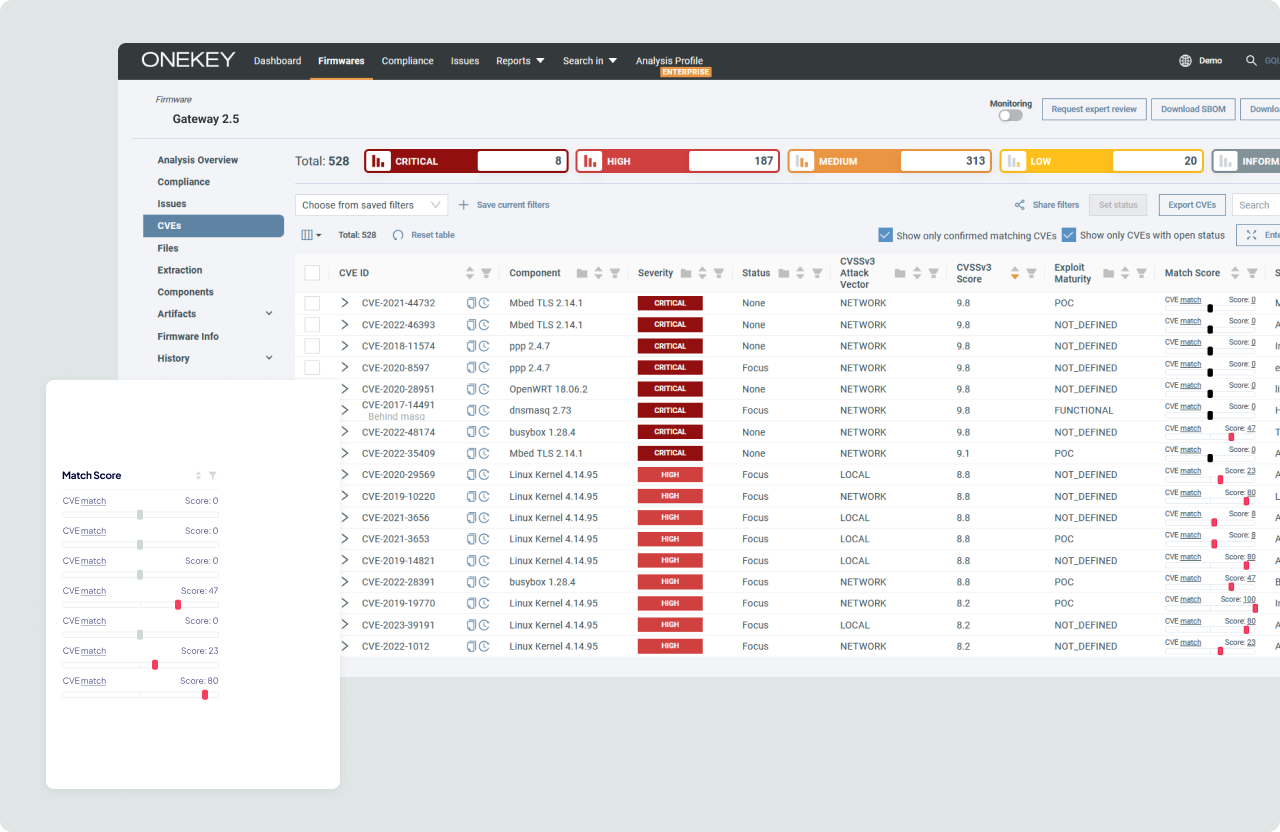
ONEKEY helps manufacturers automate product cybersecurity and compliance from design to end-of-life. It combines analysis, monitoring, and remediation support in one platform. This reduces manual effort across security and engineering teams.
Binary SCA Without Source Code
Many manufacturers do not control every line of code inside shipped products. Supplier modules, acquired products, and legacy firmware often arrive without source access. Standard scanners struggle in these cases.
ONEKEY performs binary analysis to identify components inside compiled firmware. This gives you visibility even when build environments are incomplete and is especially useful for OEM ecosystems. You can then assess vulnerabilities, affected versions, and remediation options faster while turning hidden risk into something manageable.
Automatic SBOM Generation and CRA Compliance
Regulations now expect stronger software transparency. The Cyber Resilience Act increases focus on secure development, vulnerability handling, and documentation. Reliable component records are becoming essential.
ONEKEY helps automate SBOM generation, monitoring, and evidence collection. This supports both internal governance and external compliance requests while reducing repeated manual reporting work. For manufacturers with multiple product lines, automation is critical because manual spreadsheets rarely scale or stay current.
What Is the Difference Between SCA and SAST?
SCA reviews third-party and open-source components used in software. SAST analyses your internally written source code for coding flaws and insecure patterns. Both are useful, but they solve different problems.
Is SCA the Same as Dependency Scanning?
Dependency scanning is usually one feature within software composition analysis. Full SCA also includes licence checks, SBOM creation, policy controls, and workflow management. It is broader than a basic scan.
Is an SBOM Sufficient for CRA Compliance?
An SBOM is important, but it is not enough on its own. CRA readiness also involves vulnerability management, secure processes, evidence retention, and ongoing maintenance. Think of the SBOM as one key input, not the full answer.
About Onekey
ONEKEY is the leading European specialist in Product Cybersecurity & Compliance Management and part of the investment portfolio of PricewaterhouseCoopers Germany (PwC). The unique combination of the automated ONEKEY Product Cybersecurity & Compliance Platform (OCP) with expert knowledge and consulting services provides fast and comprehensive analysis, support, and management to improve product cybersecurity and compliance from product purchasing, design, development, production to end-of-life.

CONTACT:
Sara Fortmann
Senior Marketing Manager
sara.fortmann@onekey.com
euromarcom public relations GmbH
team@euromarcom.de




Ready to automate your Product Cybersecurity & Compliance?
Make cybersecurity and compliance efficient and effective with ONEKEY.